
Meal logging
How to weigh and log cooked rice (kanin)
Log the cooked rice you actually eat, whether you measure it in grams, go back for a second scoop, or estimate a carinderia serving.
By macro ·
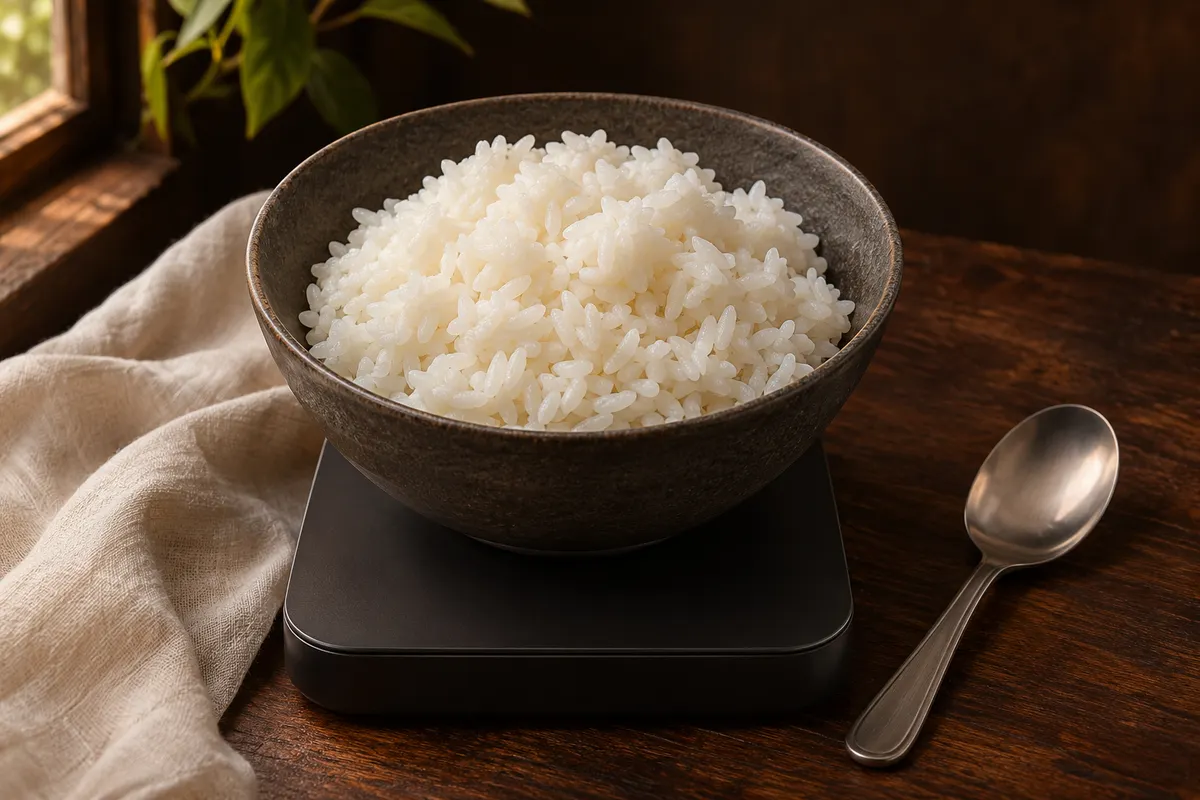
Weigh the rice after cooking
Set your scale to grams. Put the empty plate or bowl on it, press tare to zero the display, and add only the rice. The number on the scale is the cooked portion. Weigh it before adding ulam or sauce so those don’t get counted as rice.
In macro, go to Home, tap +, then choose Describe. Write the amount and preparation, for example: “125 g plain cooked white rice.” Once the estimate appears, open the meal and check that it used the cooked weight. Say “cooked” explicitly: dry rice and cooked rice are different entries because cooking adds water.
What does 100 g of cooked rice look like in a log?
The Philippine Food Composition Tables from DOST-FNRI list 129 kcal per 100 g of boiled, well-milled rice. Using that entry, 125 g is about 161 kcal. If you add a second scoop weighing 45 g, your total is 170 g, or about 219 kcal. These are examples for plain rice, not exact values for every batch or for garlic fried rice.
For a second helping, weigh the extra rice on a tared dish and add those grams to your first portion. If you leave some behind, weigh the plain rice you didn’t eat and subtract it from the amount served.
No scale at the carinderia? Log an estimate
Describe the portion you actually ate: “one level scoop of plain cooked white rice,” or “one scoop plus half a scoop.” A scoop isn’t a fixed size, and rice settles differently depending on how it’s served. If you can, weigh one scoop from your usual serving spoon at home so you have a visual reference next time.
Log rice and ulam separately in the description, and note any sauce mixed into the rice. A clearly labeled estimate is more useful than calling every serving 100 g or assuming every cup weighs the same.